Tips for parents
Every child, family, and journey is different. Camden was around 3–4 years old when we discovered her hearing loss and later when she received her cochlear implant, and what worked for us may not work for everyone.
We aren't experts and there are and will still be some challenges, but these are simply things that helped our family along the way.
What worked for us may not be right for your family - trust your instincts, take things one step at a time, and know that you don’t have to do everything at once.


Keep conversations simple and calm
Once we found out about Camden’s hearing loss, we talked to her about it in an age-appropriate way, but we didn’t make it a big deal or dwell on it too much. We wanted her to understand what was happening without feeling worried or different.
Make small communication changes at home
We adjusted how we communicated day to day — things like:
-
looking at her when we were talking
-
making sure she could see our faces
-
checking that she had heard us
Tell the people around your child
We told the people Camden saw regularly — family, friends, teachers, daycare staff, and coaches — about her hearing loss and what might help. This meant she was supported consistently, not just at home.
Share information when it’s needed
At doctors’ appointments, scans, and hospital visits, we gave Camden information in small, honest pieces, only when she needed it. We answered her questions but didn’t overload her with details she didn’t need yet.
Increase information as big moments get closer
As surgery approached, we talked more openly about what was going to happen. We explained what the hospital was for, what the doctors would do, and what would happen afterward, so nothing felt like a surprise.
Normalise hearing devices
We treated Camden’s cochlear implant like other everyday supports — similar to glasses or braces. Decorating her processor with stickers and calling it her “robot ear” helped make it something fun and personal, not medical or intimidating.
Use books to start conversations
We borrowed lots of books from the library, especially stories about:
-
being brave
-
differences and disabilities
-
kindness and inclusion
Camden loves these kinds of books, and they opened up natural conversations about how everyone is different and that differences are something to celebrate.
Keep the tone positive and reassuring
Even when we felt nervous or unsure ourselves, we tried not to put that on Camden. We always framed things as something that was going to help her, not something scary or wrong.
That didn’t mean pretending everything was easy — it meant being calm, honest, and reassuring.
Let your child lead
We paid attention to Camden’s cues. Some days she wanted to talk about her hearing or her robot ear and other days she didn’t. We followed her lead and didn’t force conversations.
Advocate, even when it’s uncomfortable
We learned quickly that we needed to advocate for Camden, particularly in medical settings, early childhood education and school. Asking questions, seeking second opinions, and pushing for clarity helped us feel more confident and informed. You know your child the best and you are their biggest champion.
It’s a journey not a race
Some things clicked quickly. Others took time. There were moments of big progress and moments of frustration. We reminded ourselves that this is a long journey, not a race.
How to talk to your child about their cochlear implant
Every child is different, and these are just examples of questions they may ask and how to answer it. We didn’t have to talk too much to Camden about these things as she accepted it pretty easily. We mainly focused on it being positive for her.
What is a cochlear implant?
A cochlear implant is a special device that helps your brain understand sound. Your ears work in a different way, and this helps you hear.
Will it hurt?
The surgery happens while you’re asleep, so you won’t feel anything at the time. Your head might feel a little sore afterwards, but we’ll make sure you’re comfortable and safe.
Does it change me?
No! You’ll still be exactly you. This doesn’t change who you are — it just helps you hear in a different way.
Do I have to wear it all the time?
It is really important that you do wear it, as it going to help you hear and communicate. You can wear it during the day and then and take it off at night for bedtime. Sometimes you might take it off for swimming or playing but we can also get things to help protect it and keep it on while you are doing those things too.
What if other kids ask about it?
You can tell them it helps you hear. You can call it your robot ear/super ear/magic ear. Or you can just say ‘It helps me’ and leave it at that. You don’t have to explain more than you want to.
I don’t like it today
That’s okay. Some days might feel harder than others. We can take a break if you need one or we can talk about how you’re feeling and why you don't like it.
Am I different?
Everyone is different in some way. Yes, having a CI is different to some people who dont have one, but this is just one of the things that makes you, you.
If your child feels tired or frustrated
You can just take a break - listening can take extra effort sometimes and its okay for them to feel tired. If things got too much we wouldn't push it as we didn't want it to become something negative or hard. Evidence shows the more a child wears their CI, especially at the beggining of their journey, the more beneficial it is and the quicker they learn, however it is okay to take a break if they are overwhelmed.
‘It’s okay to feel tired. Let’s take a break and give your brain a rest, and try again soon'.
Making it fun!
Stickers
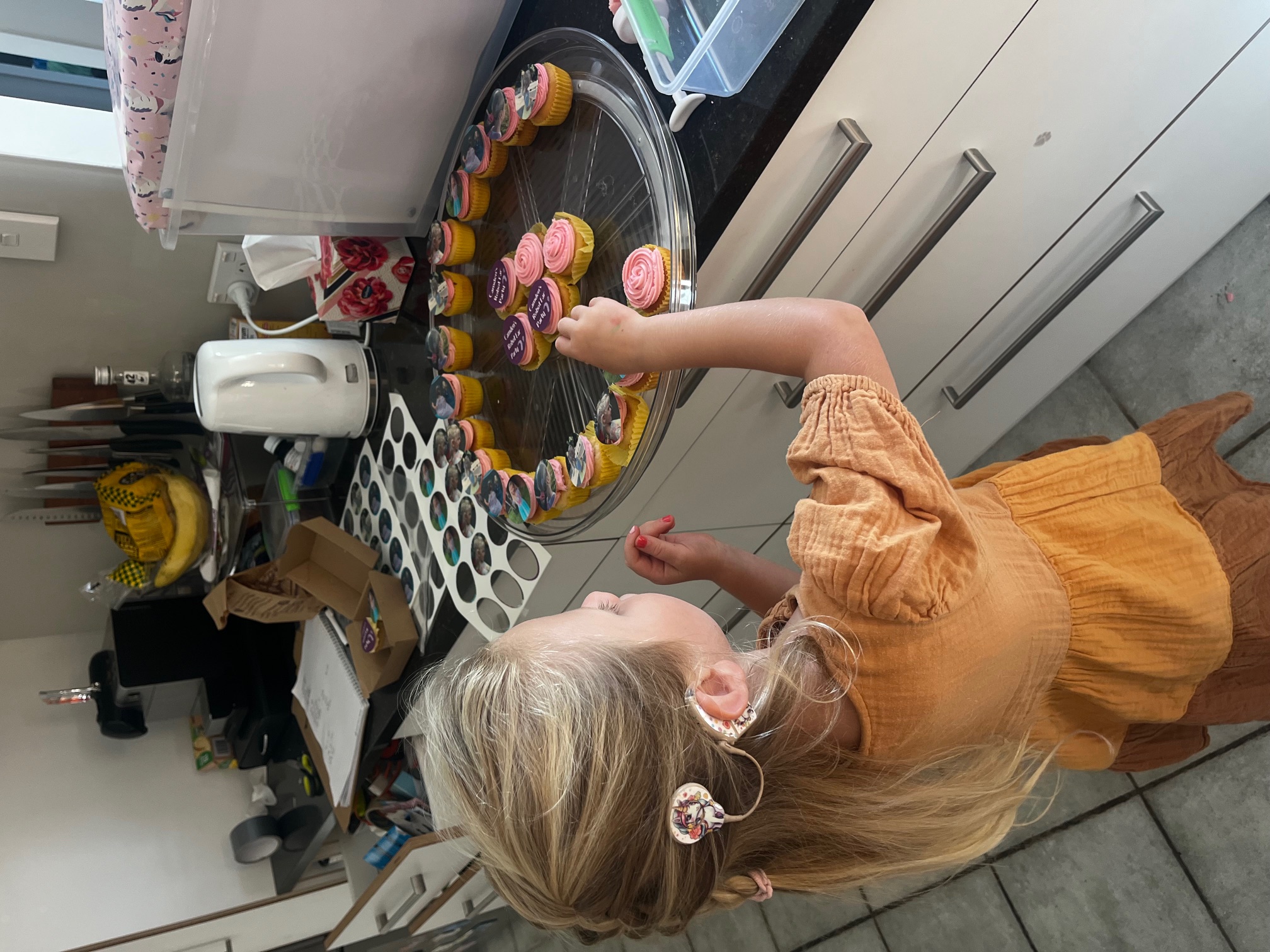
This is something we found really worked for Camden in making it fun - using stickers to decorate her ear. There are many different sites that sell stickers and these are shaped specifically for CIs and come in the different shapes for different brands.


Streaming and watching tv as homework
We would down time or screen time as a way to train her ear. Our audiologists and speech therapist suggested watching shows that were familiar so Camden already knew what the show sounded like, and we would stream these directly to her ear.
So while it was training her ear, it was still fun and enjoyable and a treat to be watching her favourite shows.



Robot ear party - a celebration of one year with a CI
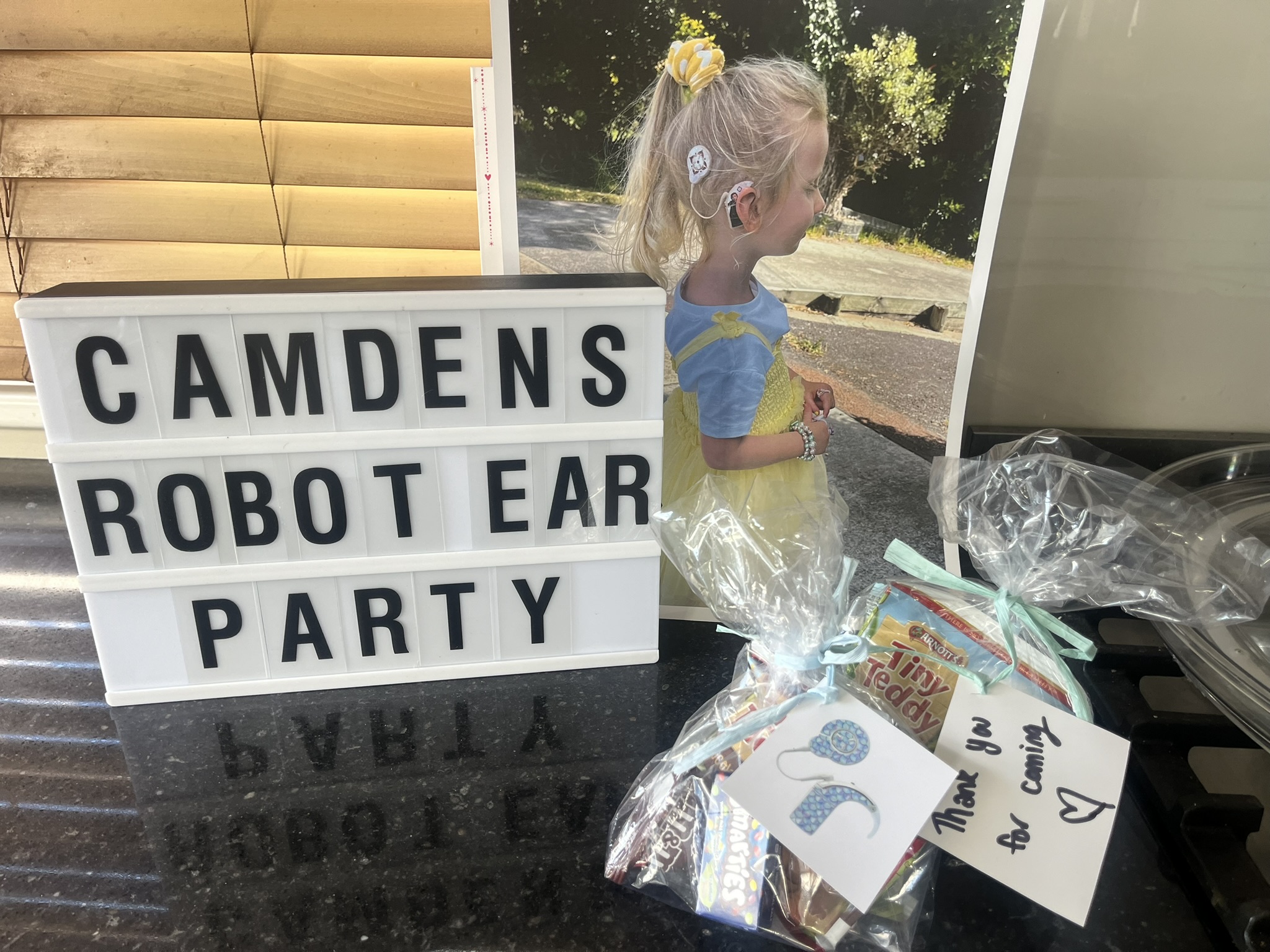
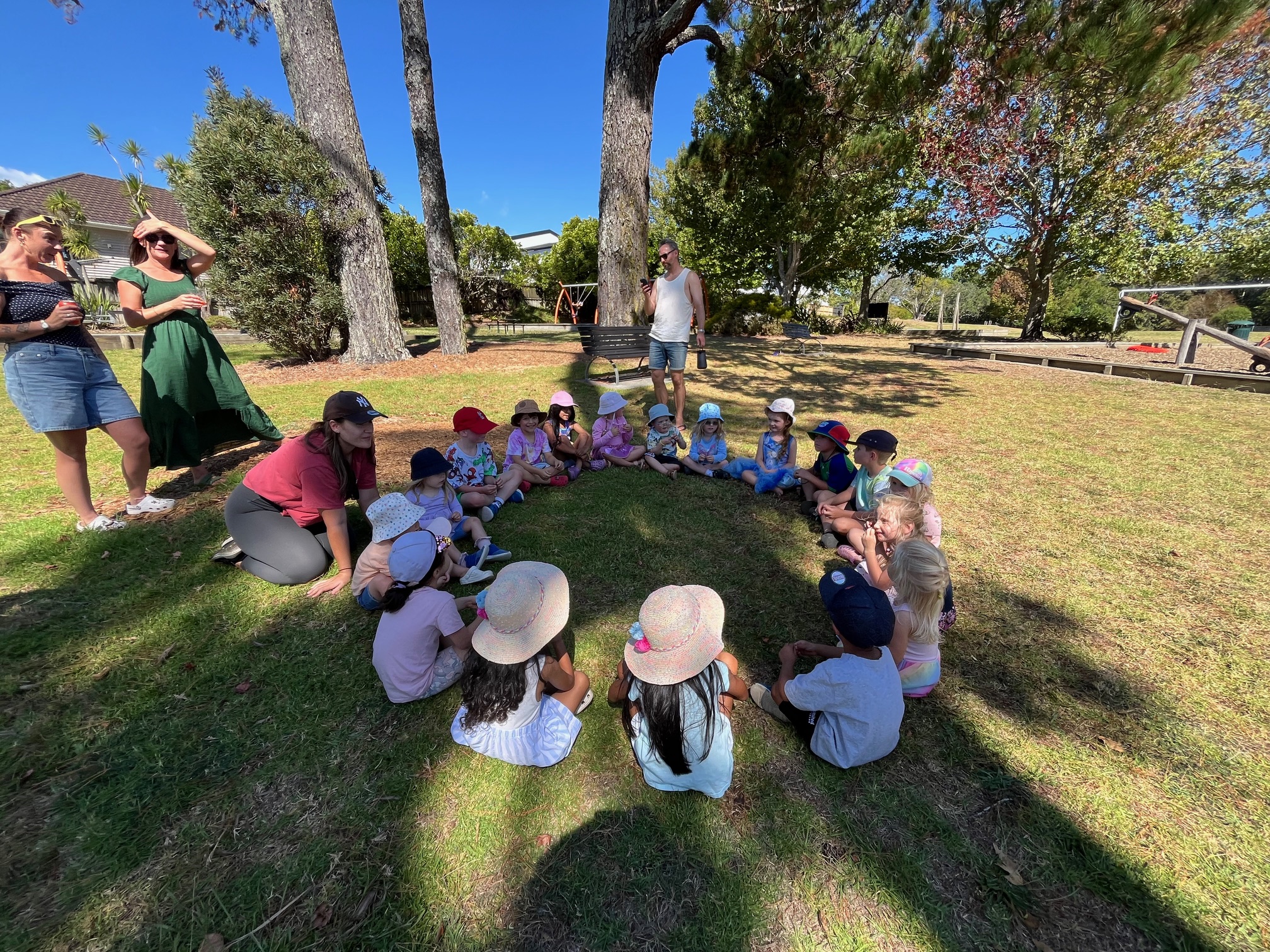
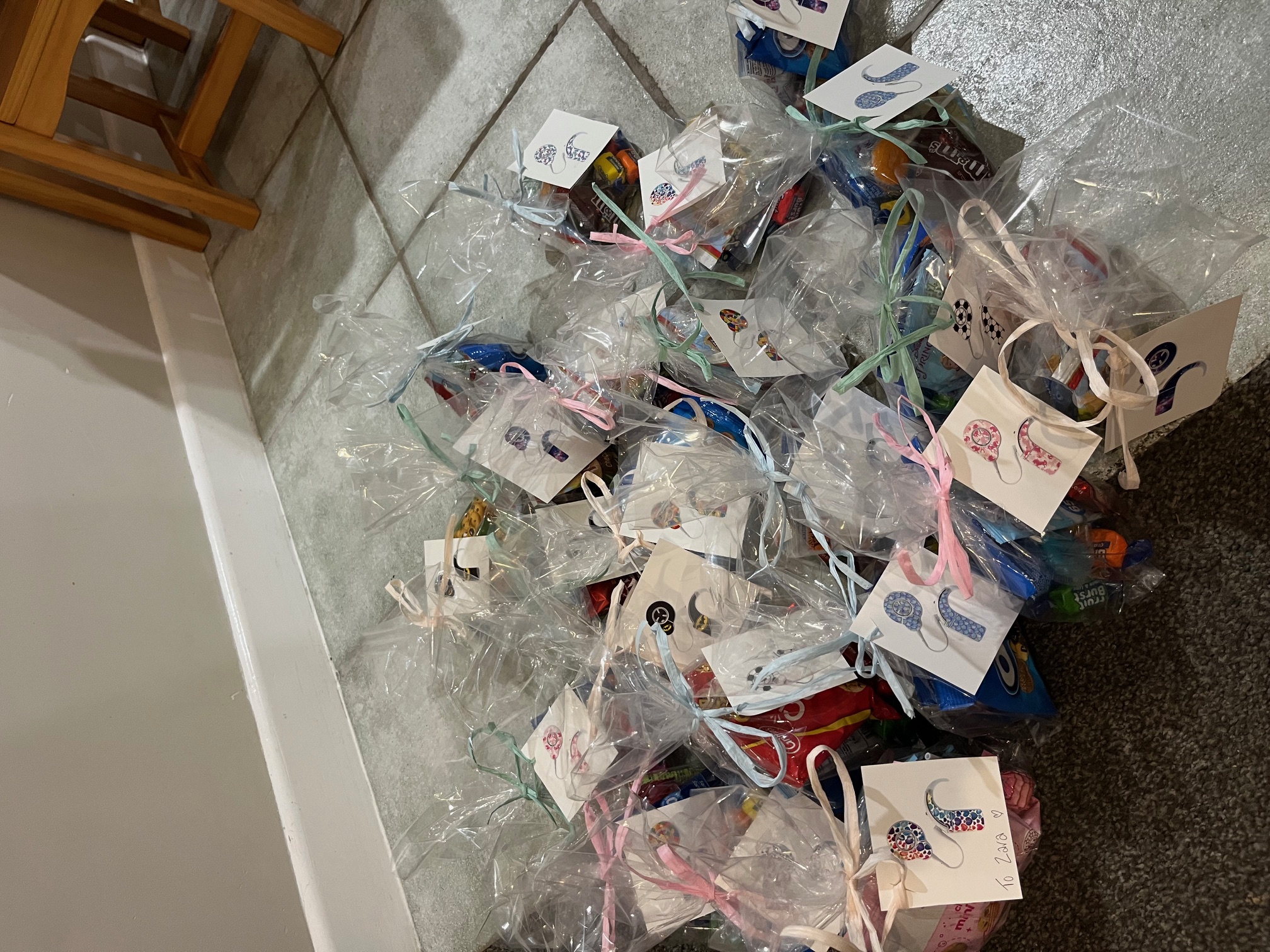
To celebrate one year of Camden having her cochlear implant, we decided to throw a Robot Ear Party.
We invited her friends, our friends and family, and her sister’s friends too — so that it felt inclusive and special for both girls. It wasn’t just about the implant, it was about celebrating how far Camden had come and how confidently she wears her robot ear.
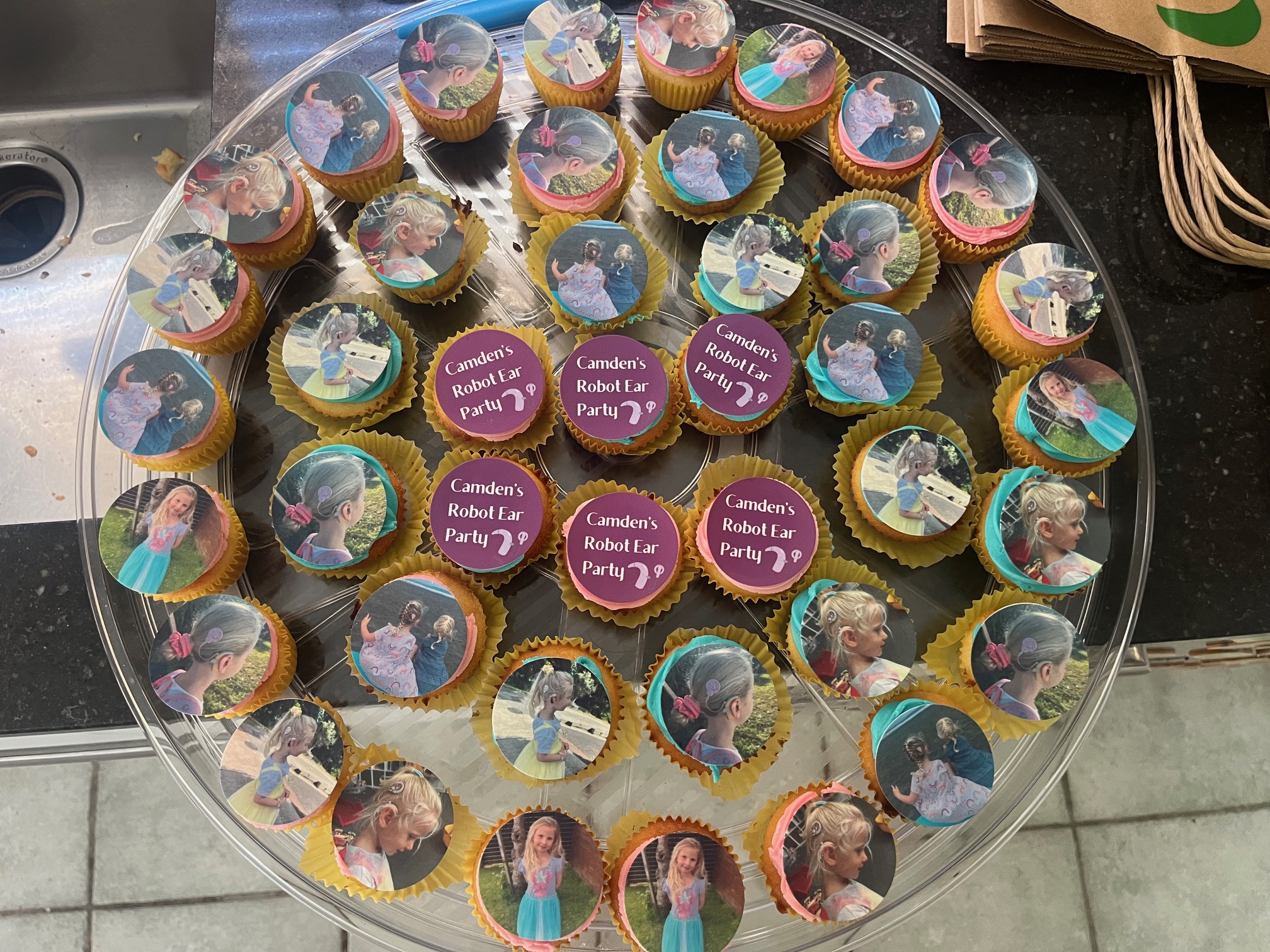
We held it at our local park so the kids could run around freely, and we kept it relaxed and fun. We had pizza, snacks, drinks, and cupcakes topped with printed photos of Camden, cochlear implants, and pictures of both Camden and her sister — so everyone felt included.
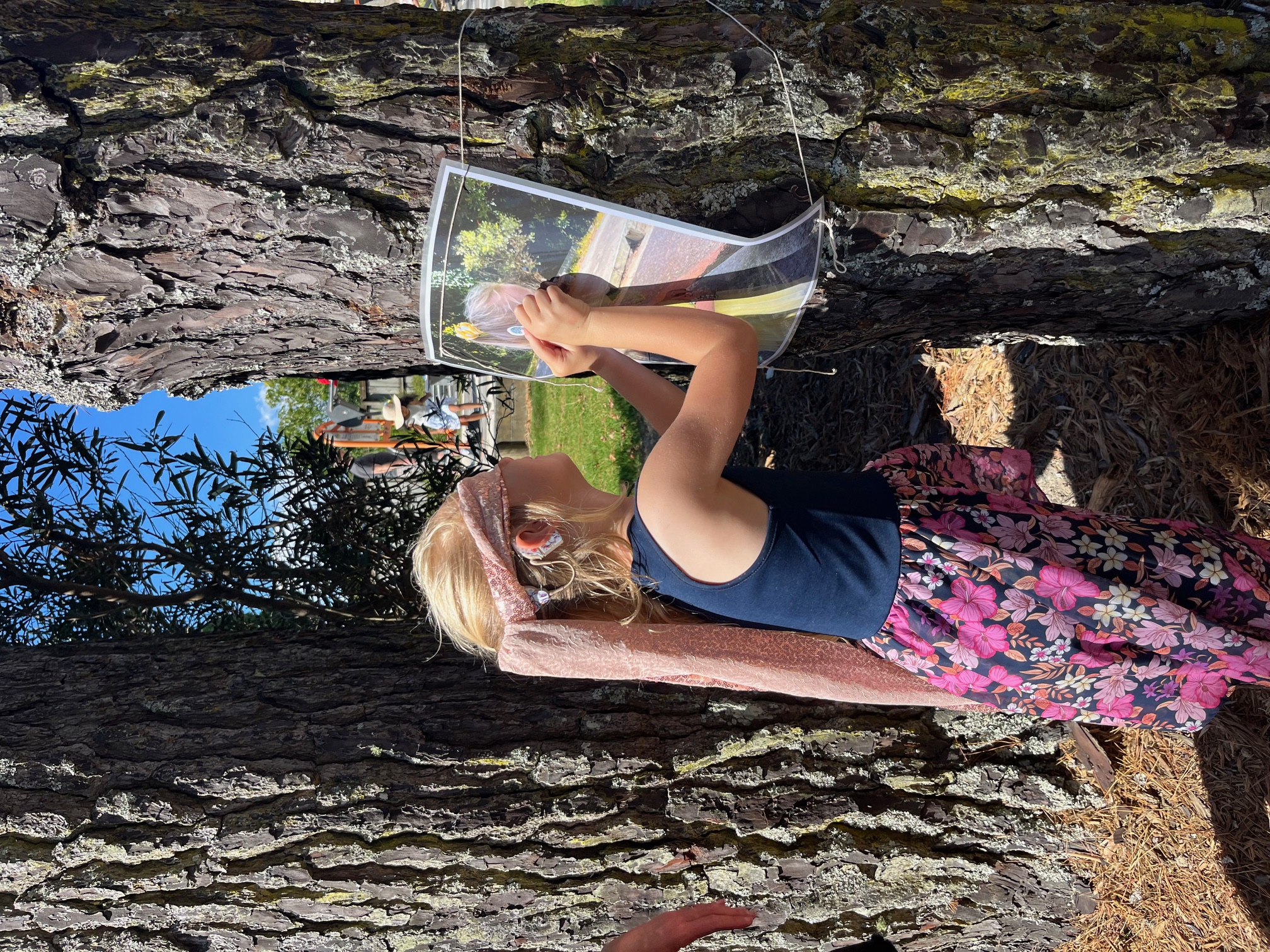
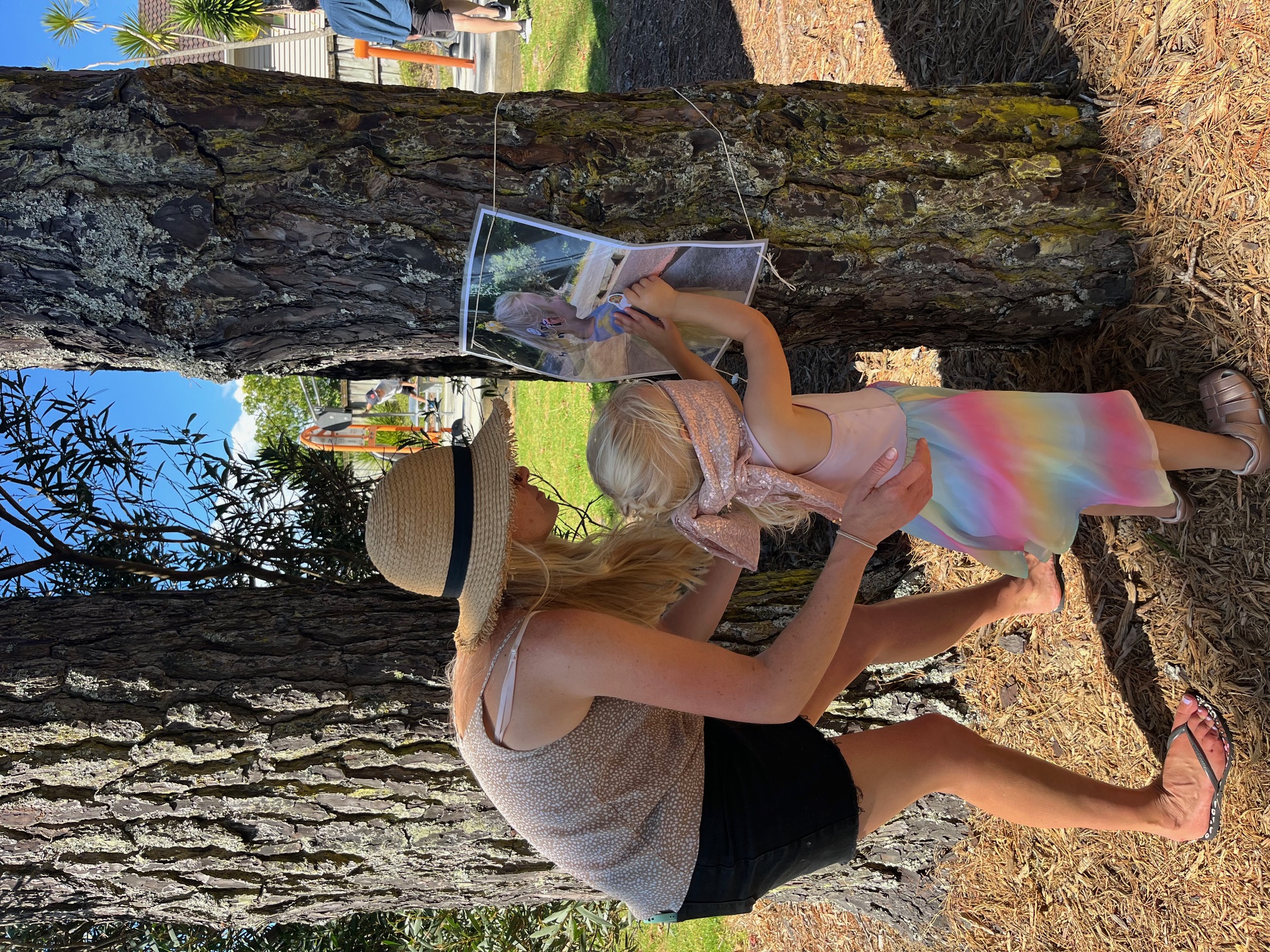
We created a “Pin the CI on Camden” game, printing out little cochlear implants in different patterns so each child could choose their favourite. We tied a large photo of Camden to a tree, blindfolded the kids, and let them try to place the implant in the right spot. The kids loved it!
We also played pass-the-parcel, with a Lego set as the final prize - and the Lego figure had a cochlear implant.
More than anything, the party made her cochlear implant something to celebrate, not something to shy away from. It kept the conversation open and positive and include everyone. Camden felt incredibly proud and we want to do a little something each year to mark the milestone and celebrate - but making it more of a celebration about everyone’s differences and their own superpowers.
It doesn’t have to be a party, or games, or cupcakes. But marking milestones and inviting others into the journey can turn something that could be looked at as scary into something fun and positive.




Challenges
Of course there were challenges along the way, and there still are some days, and these were the biggest challenges we faced. We know some kids dont like to wear their CI however we were lucky that Camden was okay with that (that could change!) but she does refuse to wear it during high intensity activities like gymnastics.
Physical activity:
Camden loves running, trampolining, swimming, and gymnastics. During active play, the processor can fall off. Sometimes a headband helps, but for some activities she chooses to take it off. We know she hears less well during those times, but she manages.
She has also been discouraged from contact sports due to the risk of damaging the internal implant.
Fatigue:
Listening through a cochlear implant takes effort. The brain works harder to interpret sound, and fatigue can build up. Camden often pushes through until she suddenly crashes, so we try to be mindful of signs of tiredness before it reaches that point.
Noisy environments:
Busy places like restaurants, playgrounds, or loud classrooms can still be challenging. And we try to make sure we are close and facing her when talking, rather than yelling across a room.
Sound localisation:
Camden still struggles to tell where sounds are coming from. If she hears us but can’t see us, she may not know which direction we are. This is something we continue to work on and support her with.